Can You Have Too Much Real Estate? What Every Property Buyer Should Know | Himanshu Huriaa
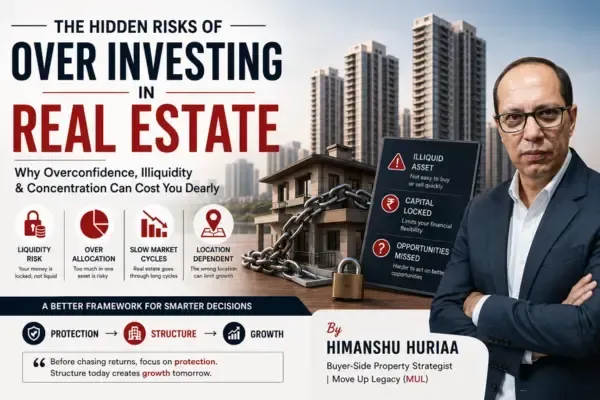
Why “Property Kabhi Fail Nahi Hoti” Can Become a Dangerous Belief
One of the most common beliefs in Indian real estate is:
“Property kabhi fail nahi hoti.”
At first glance, it sounds comforting.
But this mindset often creates something dangerous:
overconfidence.
And overconfidence in property investment often leads to over allocation.
Many buyers slowly put most of their wealth into one asset class — real estate.
one city
one location
one project type
That is not diversification.
That is concentration risk.
Real Estate Is Not a Guaranteed Upward-Moving Asset
Many investors assume property prices only move upward over time.
Reality is more complex.
Real estate is:
illiquid
cyclical
sentiment-driven
highly location-dependent
Several Indian property markets have gone through long periods of slow or stagnant growth despite strong infrastructure stories and optimistic market narratives.
No asset class grows forever.
Every investment carries:
timing risk
liquidity risk
holding risk
expectation risk
Understanding these risks is essential before making large property investment decisions.
The Most Ignored Risk in Property Investment: Liquidity Pressure
One of the biggest risks in real estate investing is liquidity pressure.
When too much capital gets locked into property:
financial flexibility starts disappearing
emergencies become stressful
business opportunities become harder to act on
market changes become difficult to navigate
Even a “good property investment” can become emotionally and financially heavy if the structure behind the decision is weak.
This is why liquidity matters more than many buyers realize.
Why Property Investment Structure Matters More Than Excitement
At MUL, we believe buyers should think beyond appreciation stories.
Because appreciation alone does not create intelligent investing.
Structure matters.
Suitability matters.
Liquidity matters.
Protection matters.
That is why our framework begins with:
Protection → Structure → Growth
Not the other way around.
Before discussing returns, buyers should first evaluate:
downside protection
holding practicality
financial flexibility
long-term suitability
A well-structured decision often matters more than an exciting opportunity.
A Better Way to Think About Property Investment Decisions
Most buyers ask:
“How much can this property grow?”
A better first question may be:
“What happens if my assumptions are wrong?”
That shift in thinking can prevent expensive long-term mistakes.
Good investing is not just about growth potential.
It is also about:
protecting downside risk
maintaining flexibility
avoiding emotional over allocation
making sustainable long-term decisions
Final Thought
Conviction matters.
But protection should come before conviction.
The goal is not just buying property.
The goal is making property decisions that remain practical, sustainable, and aligned with long-term reality.
Need Clarity Before Buying Property?
WhatsApp “REVIEW” for a structured buyer-side property assessment focused on:
risk analysis
liquidity evaluation
suitability assessment
long-term decision clarity
Custom HTML/CSS/JAVASCRIPT
Further Reading
Build a stronger decision framework:
Return Is Not The First Question: A Framework For Property Growth
Property Buying Guide: The Complete Step-by-Step Roadmap Before You Invest
Avoid concentration and location risk:
Disclaimer: This content is for educational purposes only and does not constitute financial, legal, or investment advice. Please conduct independent due diligence and consult relevant professionals before making any property decision.